Destiny 2: Edge of Fate
After The Final Shape, Bungie set out to change how players build, gear up and level their characters, and to make armor matter again.
I led UI/UX for weapons, armor and the new power system: a team of six (two visual designers, two UX designers, a technical UX designer and a UI engineer), working with Systems, Economy and Destiny 2 leadership. It was my first time as an area lead.
- Role
- Design UI/UX Area Lead
- Services
- UI/UX leadershipUX designUI design
- Studio
- Bungie
- Team
- 6 people
- Year
- 2025
Seven features, one gear system
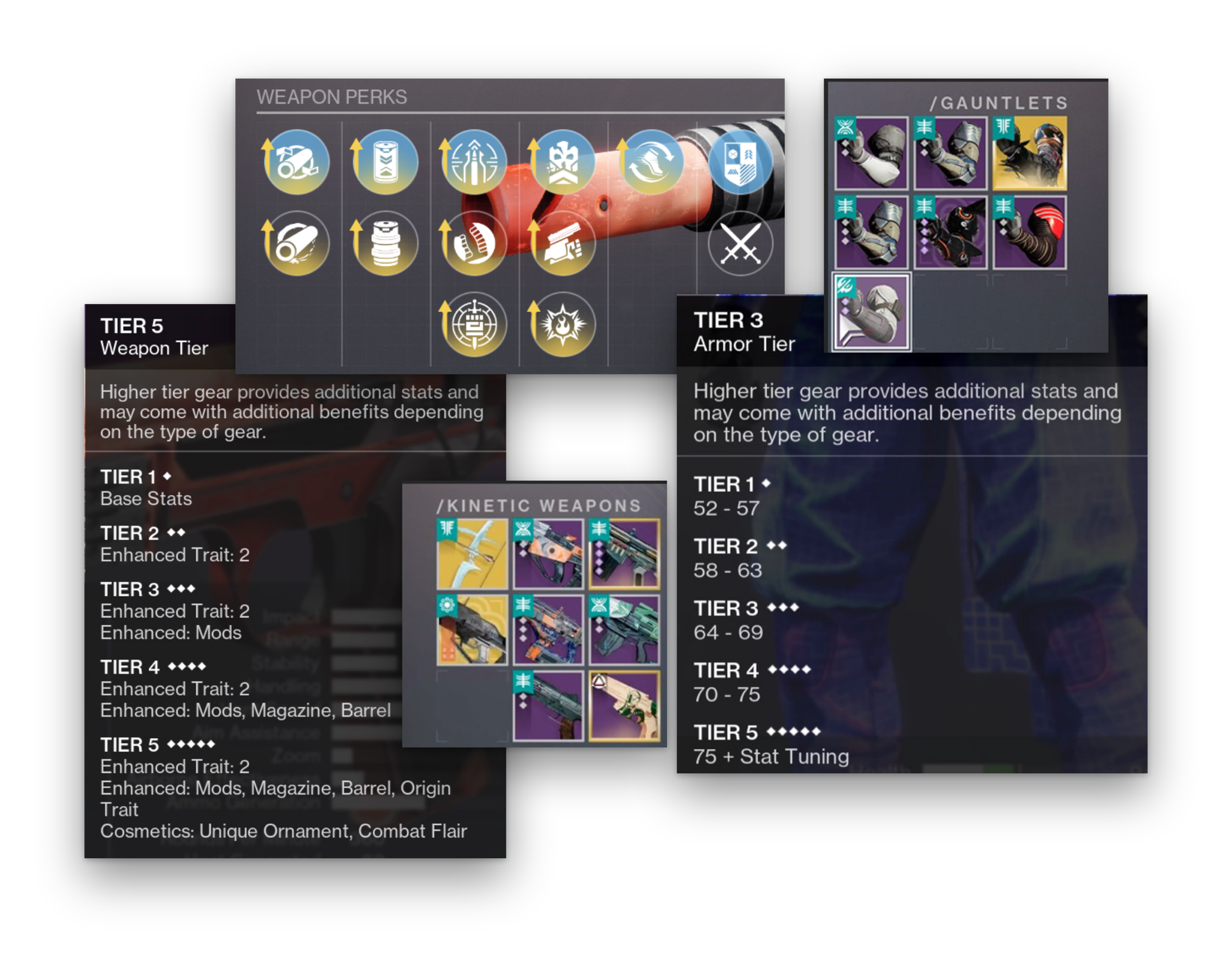
Weapons and armor drop at Tier 1 to 5. Each tier adds more, and Tier 5 adds a unique ornament and combat flair.
This season's gear boosts weapon damage and armor damage resistance in PvE, and raises Portal rewards.
Power above the 200 cap, earned in harder content, shown in teal and reset each season.
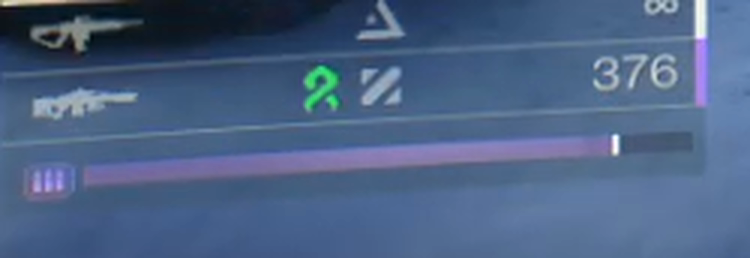
Replacing a vague armor mod, a meter under each weapon fills with every kill, so players know exactly when the next kill drops an ammo brick.
Six archetypes, like Brawler (Melee and Health), set each piece's primary and secondary stats.
Wearing two or four pieces of a set unlocks bonus perks.
Six stats renamed Weapons, Health, Class, Grenade, Super and Melee, scaling to 200.
The gear tooltip
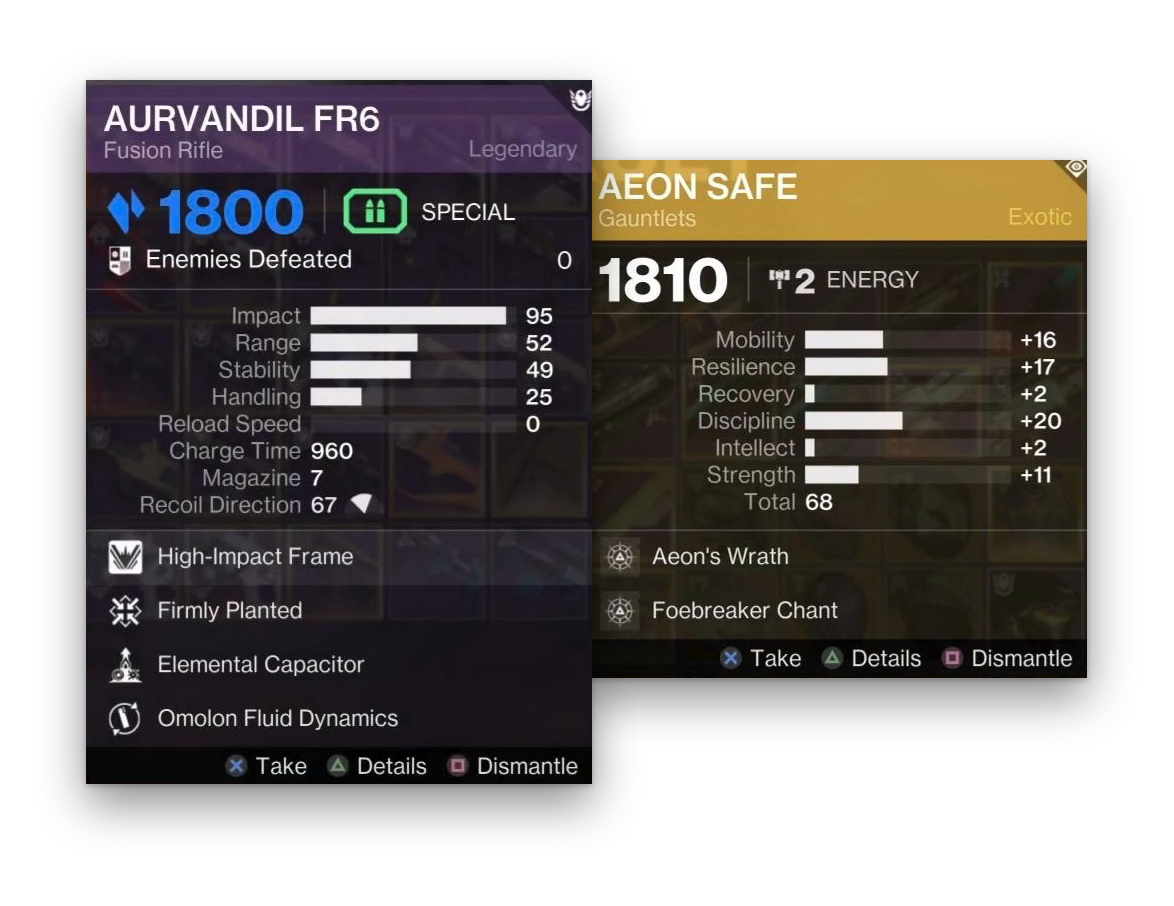
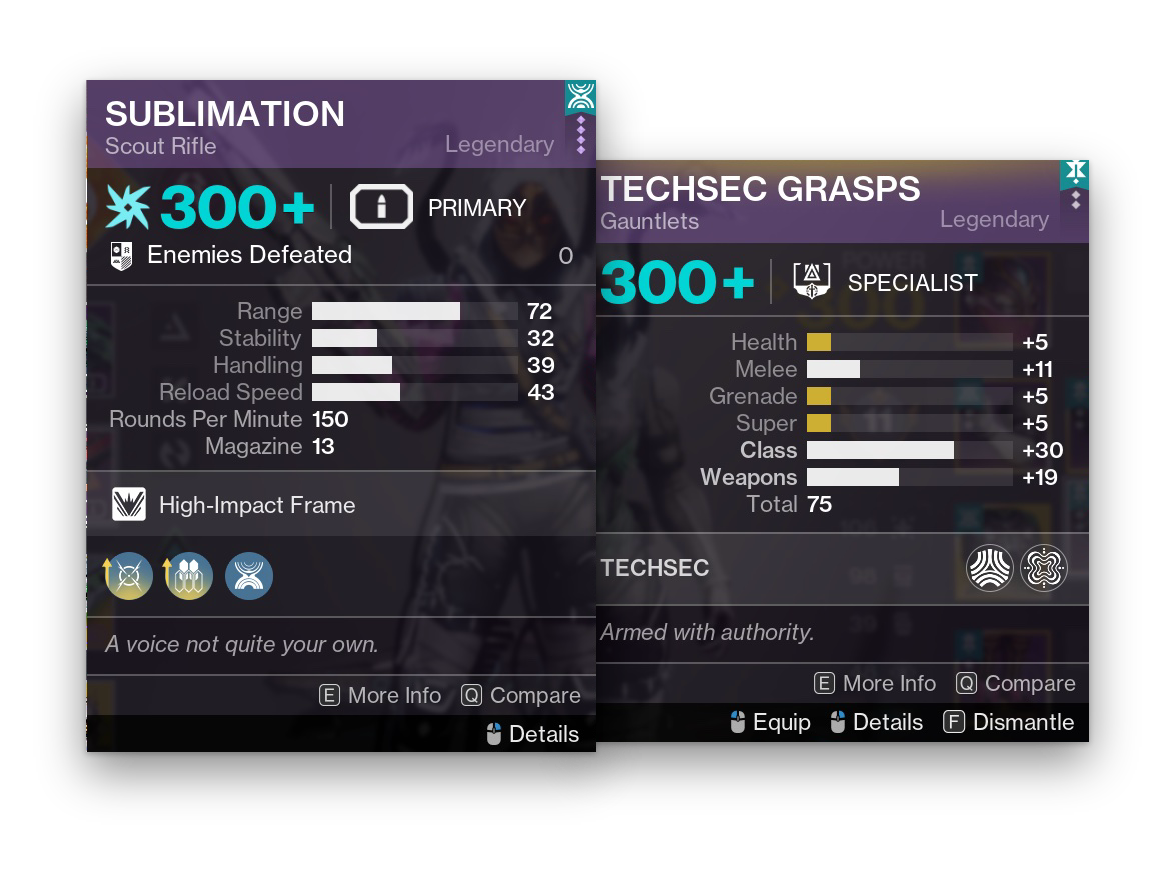
I set one rule for the gear tooltip: show only what a player needs to quickly decide what to do with an item (equip, dismantle, infuse or store). Everything else moves to the expanded panel, or lives only on the details screen.
That cut weapon level and all but the most important stats, turned perks and mods into a single row of icons, and moved More Info and Compare onto the tooltip. It made room for the new information, Seasonal Power, tier, archetype and set, without a longer tooltip.
Worth it at a glance
Tiers replaced Artifice armor and Adept weapons with one clear rank, Tier 1 to 5, so players know what a piece of gear is worth the moment they see it.
I split the work by discipline: UI/UX designed a tier icon that reads at a glance and audited every screen that needs it, and technical UX built a reusable pip template driven by gear data, so tiered and legacy gear display correctly everywhere.
Six ways to build
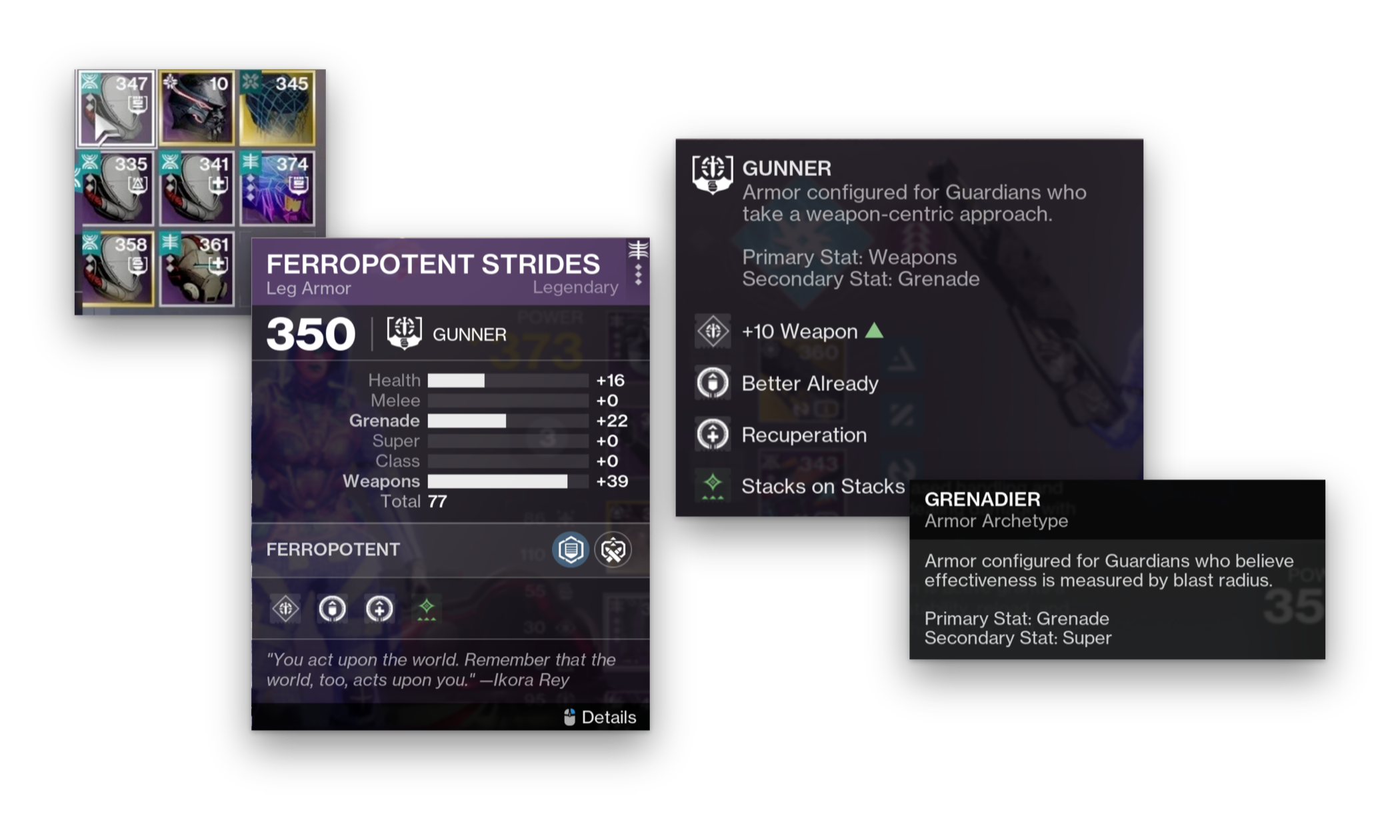
Armor now rolls with one of six archetypes that sets its primary and secondary stat, so builds are easier to plan at a glance: Paragon, Grenadier, Specialist, Brawler, Bulwark and Gunner.
Every armor tooltip names its archetype, the expanded panel and details screen explain it, and each tile shows its icon, so pieces compare without opening them.
Perks for wearing a set
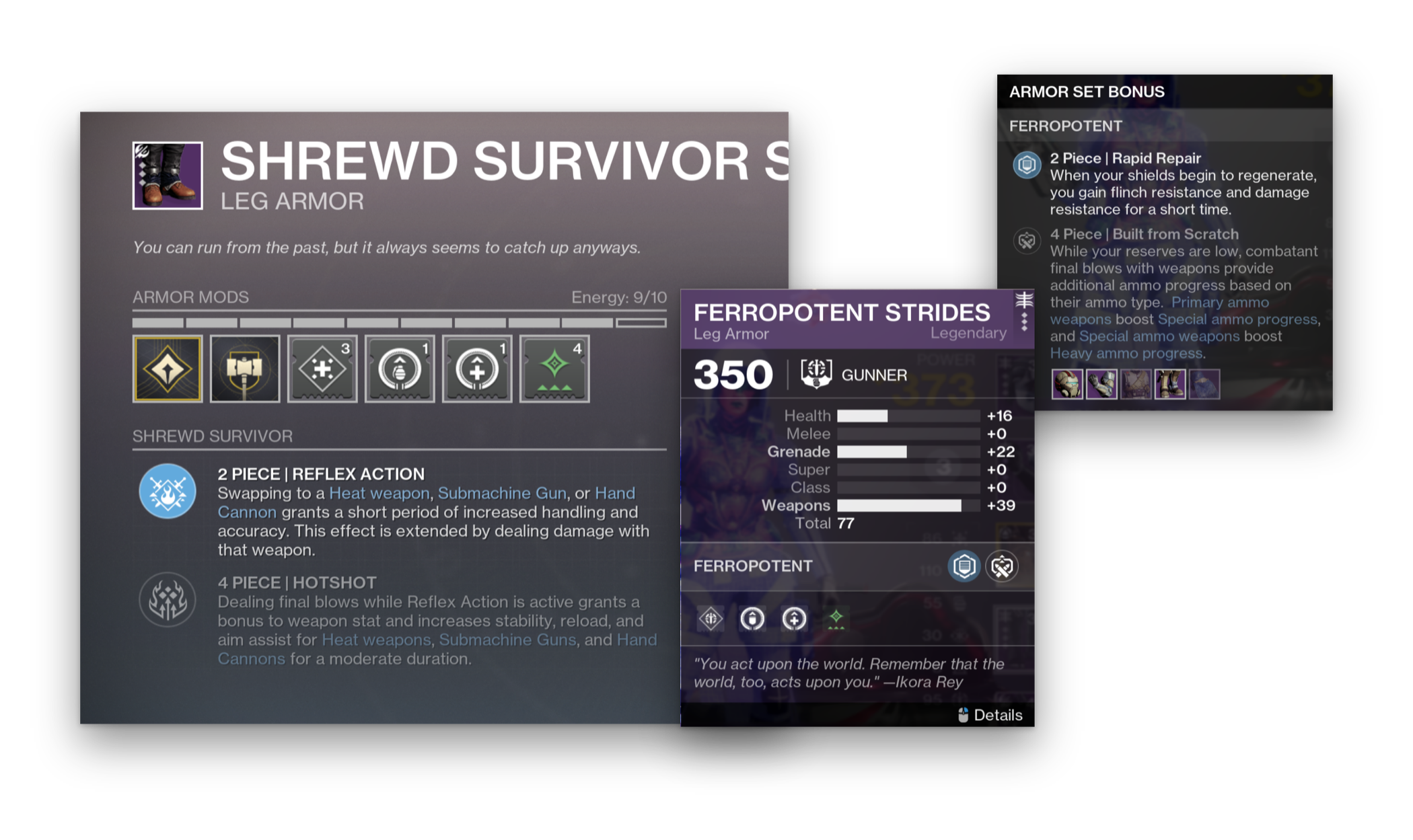
Equipping two or four pieces from the same set grants bonus perks, adding a new layer to buildcrafting. Bungie described set bonuses as an origin trait for armor: a perk that reflects the set's theme.
The tooltip names the set, the character screen shows which perks are active and which pieces you're wearing, and the details screen spells out both perks in full.
One teal number
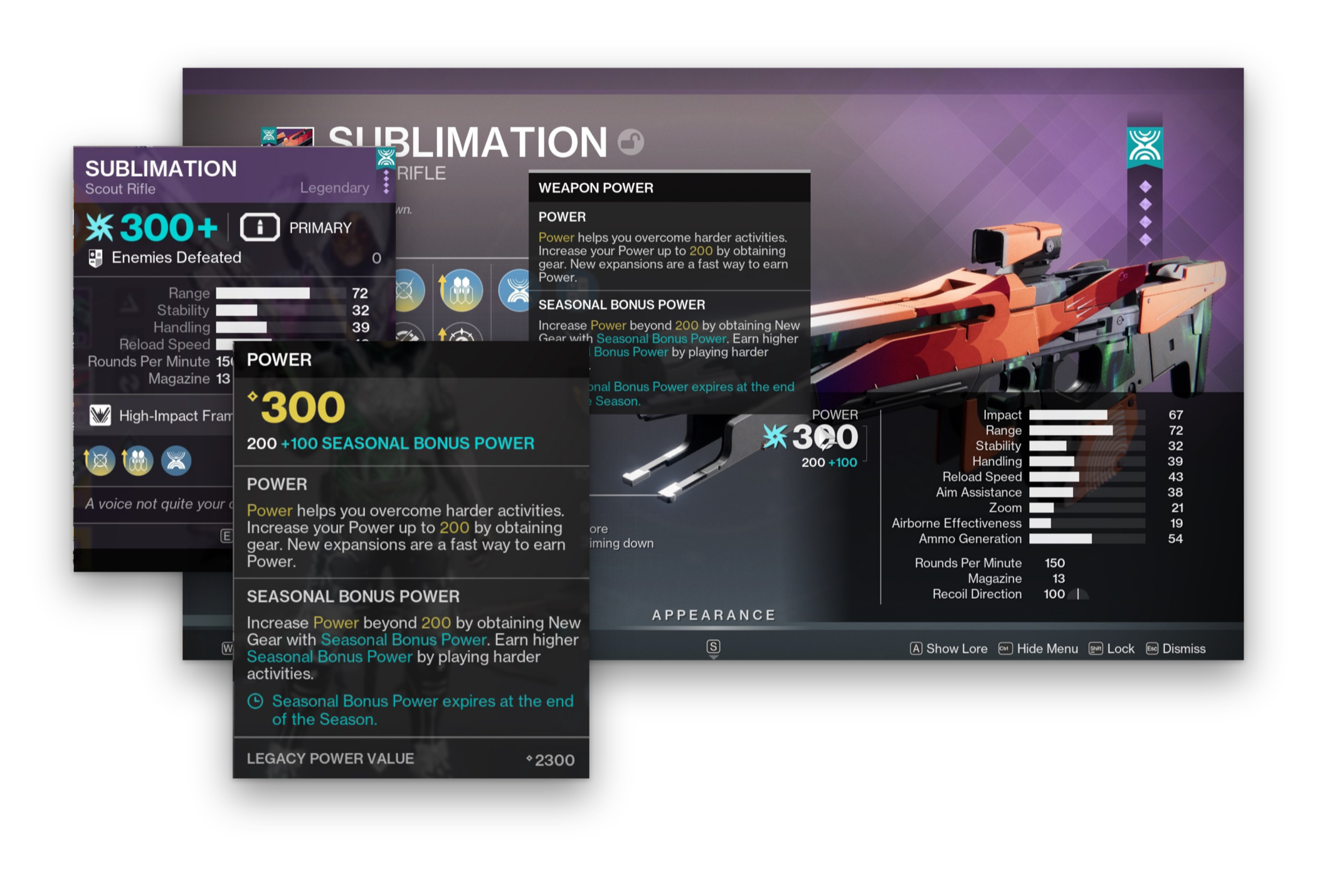
Seasonal Power sat on top of the 200 base cap, on every weapon and armor piece, and reset each season.
Leadership first wanted the full breakdown on every tooltip. I disagreed, and ran a quick internal survey on the clearest way to tell the two apart. The results won approval for a simpler signal where two numbers wouldn't fit: a single teal number with a plus. The full breakdown, base in white and seasonal in teal, lives on the details screen.
Rewarding this season's gear
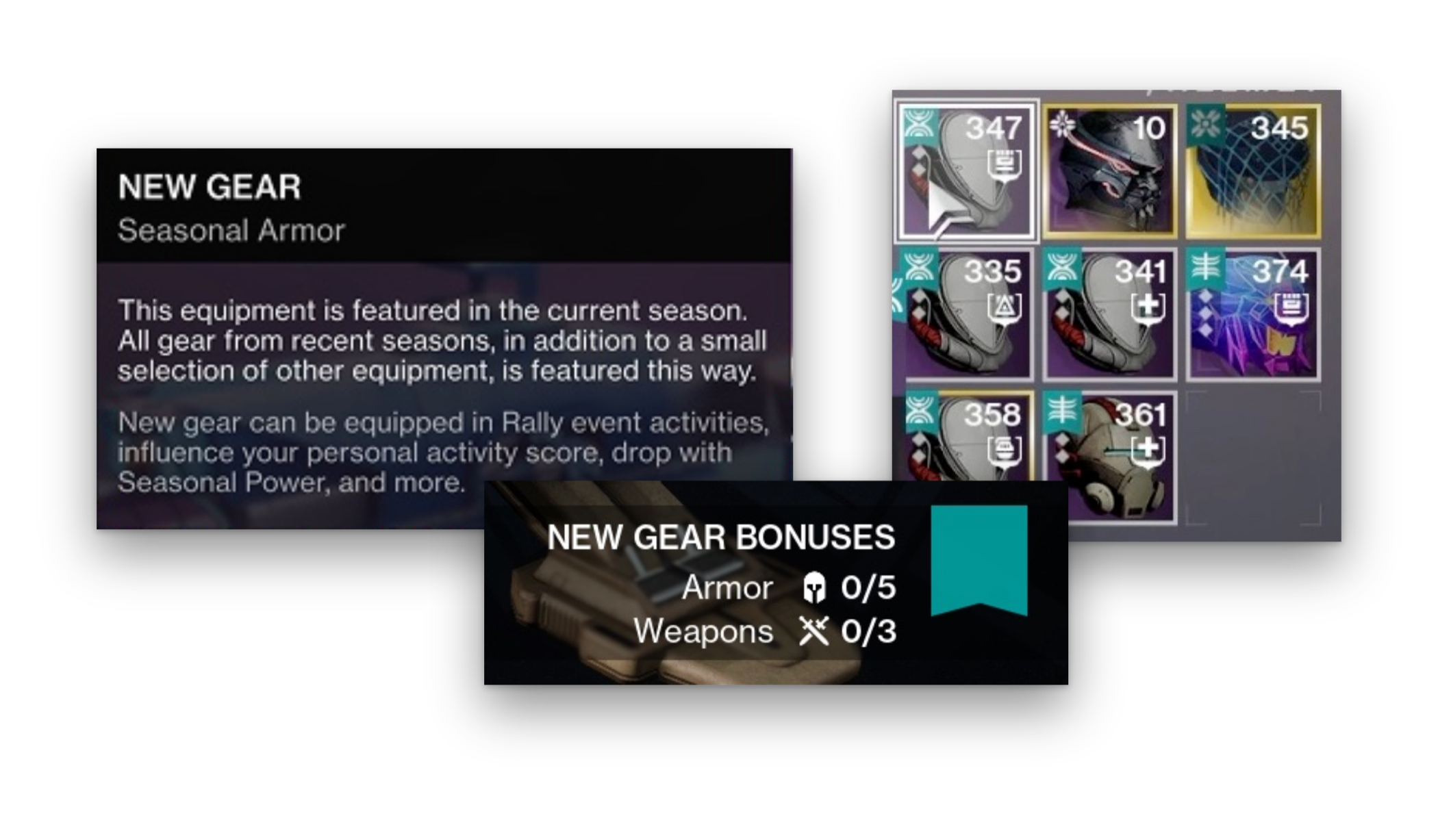
Gear from this expansion gets a New Gear tag that boosts weapon PvE damage and armor damage resistance, growing at higher tiers, and raises rewards in Portal activities.
A teal flag marks every eligible item, and the artifact screen tallies how many New Gear pieces you have equipped.
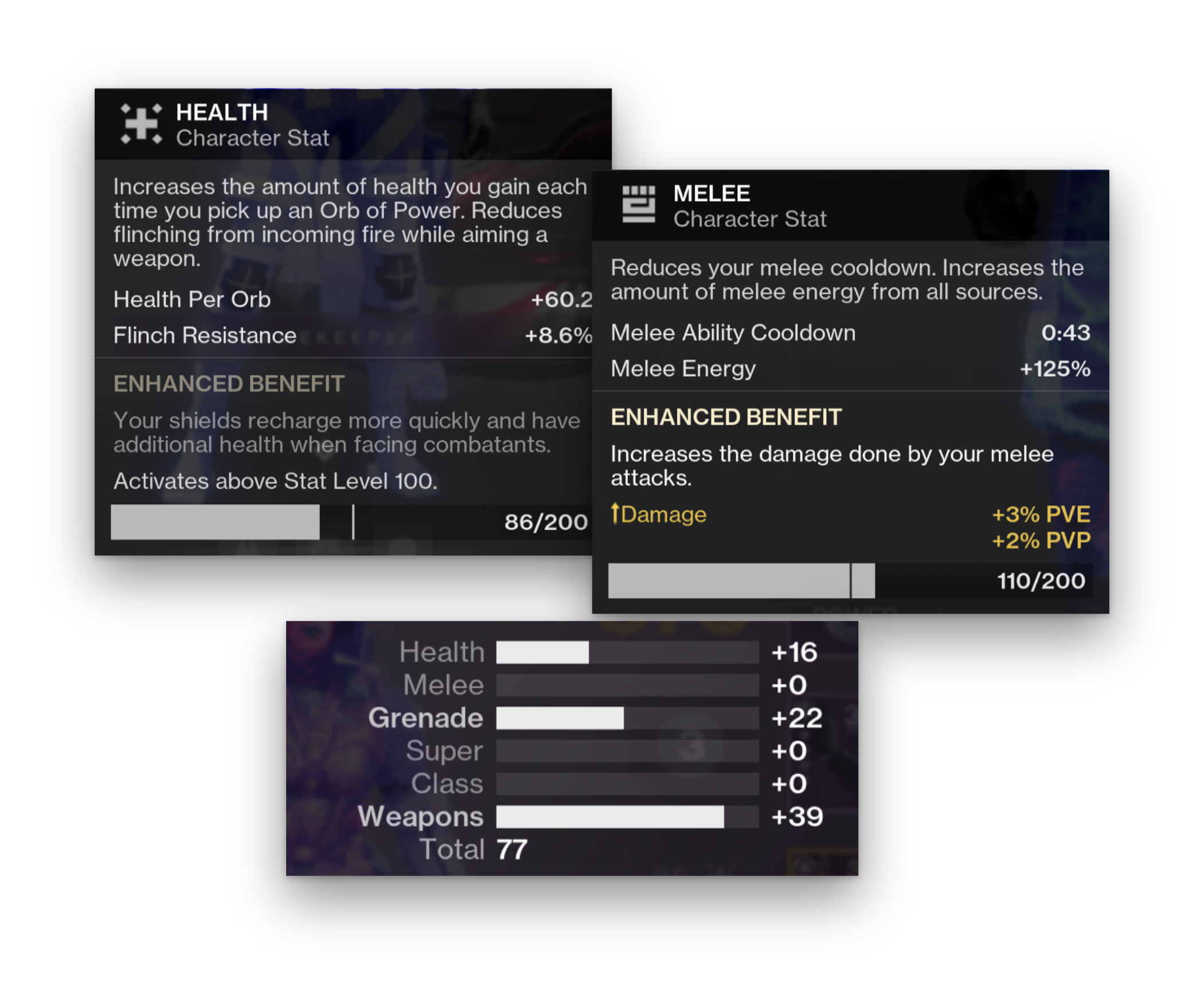
Six new stats
Mobility, Resilience, Recovery, Discipline, Intellect and Strength became Weapons, Health, Class, Grenade, Super and Melee.
Stats now scale to 200 with every point mattering, and past 100 a stat grants enhanced benefits, shown in each stat's tooltip.
Ammo meters
Edge of Fate removed the ammo armor mod, because it was too unclear what it actually did. In its place, a meter under each weapon fills by a set amount with every kill, so players know exactly how many kills are left. When the meter is full, the next kill drops a Special (green) or Heavy (purple) ammo brick.
I did the technical UX and built the meters in the engine myself, and sat in the lead meetings that decided whether the feature would ship.