Luminora
Luminora is "a more playful way to win at life": a hand-crafted, interactive sidekick called a Lumie, who learns how you work, shows up for you every day, and helps you build a life you love one goal at a time.
I'm the lead UI/UX designer. I started on the UI side while working full-time at Bungie, and my work grew into defining the product itself: what Wendy and a Lumie are for, your relationship with her, and the UX framework and interaction models on desktop and mobile. I keep the team focused on the core first, and I designed and built everything here myself, prototyping and shipping with AI coding tools.
Luminora is still in the rough stage, so the screens use temporary visuals. This case study is about the UX: the structure, the behaviour and the decisions.
- Role
- Lead UI/UX designer
- Services
- Product definitionUX designPrototyping
- Team
- 10 people
- Company
- Luminora
- Year
- 2025–now
- Status
- In progress, temporary visuals
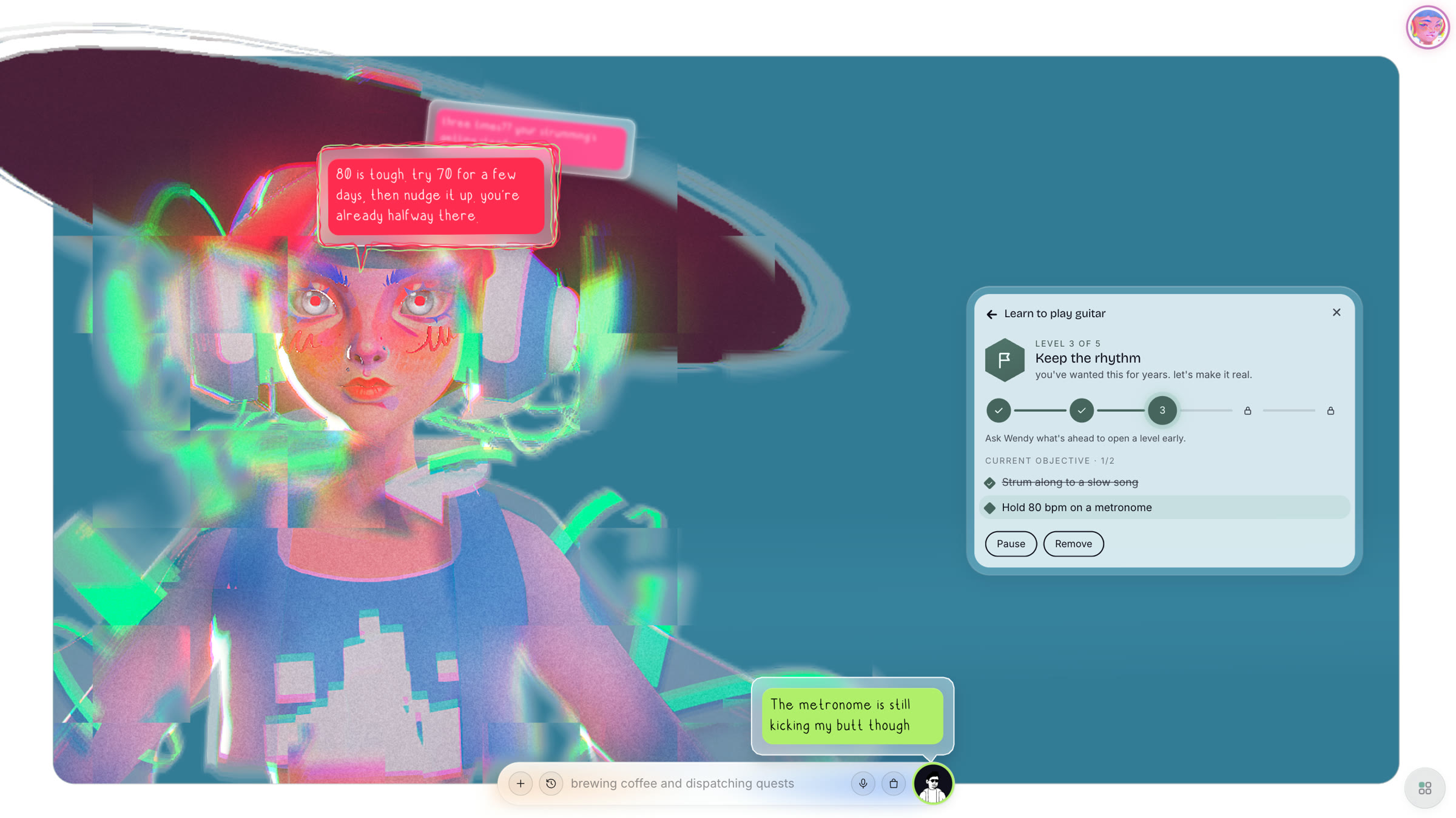
The idea: help you enjoy your real life
Wendy is your sidekick for real life. She takes care of the busy parts of life so you can get off your screen and enjoy your real one: out in the world, with your friends, doing what you love. Success isn't time spent with Wendy; it's time well spent away from her.
The core loop
Every turn makes the next one better: the more she knows, the more she can take off your plate, and the more of your real life you get back.
Day one, she handles one small, real thing perfectly. By week one, she's planning your days with you. By month one, she knows your patterns and protects your time without being asked.
Designing for AI
Chatting with AI today is one-sided: you can't see anyone, and it agrees with almost everything you say. These are the principles I design Wendy around.
Her face and reactions add the body language that AI chat is missing, so the relationship feels two-sided.
Each Lumie has her own personality. Wendy jokes, pushes back and tells you when you're wrong.
What she remembers is shown in plain words: correctable, forgettable and private by default.
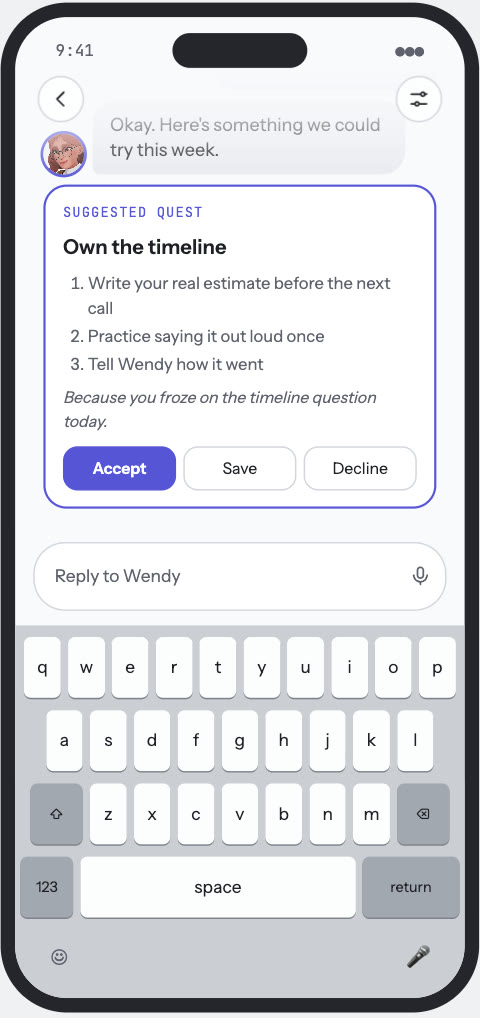
Every suggestion comes with its reason, tied to something you said.
She suggests; nothing starts without your yes.
Designing how Wendy behaves
I don't only design the screens around Wendy; I write the rules for how she thinks, talks and learns, and ship them into her instructions.
A quest takes real effort, time and growth: you overcome something. Knitting isn't one; it's a hobby to enjoy, and you can knit the same hat again.
Short sentences, a character limit, just the main beats, like cliff notes.
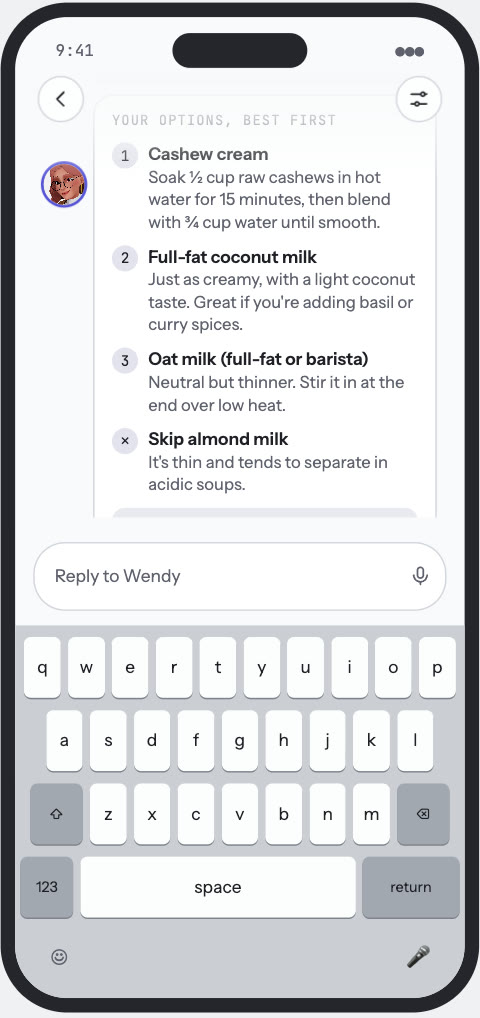
Fewer words on a small screen, and a quick handoff to where the task belongs, like a video straight to YouTube.
She picks things up in natural conversation, the way you get to know someone, never by quizzing you for a profile.
She never judges your body, age or money, and sensitive things like health, job loss or grief never lead.
Wendy drives, navigation is the fallback
You aren't meant to dig through HUDs. Wendy brings up what you need, in context, one thing at a time, and it leaves when the moment passes. Asking always works too, and the menu is there as a fallback. This one rule shaped the Vault, the profiles, the input and the phone app below.
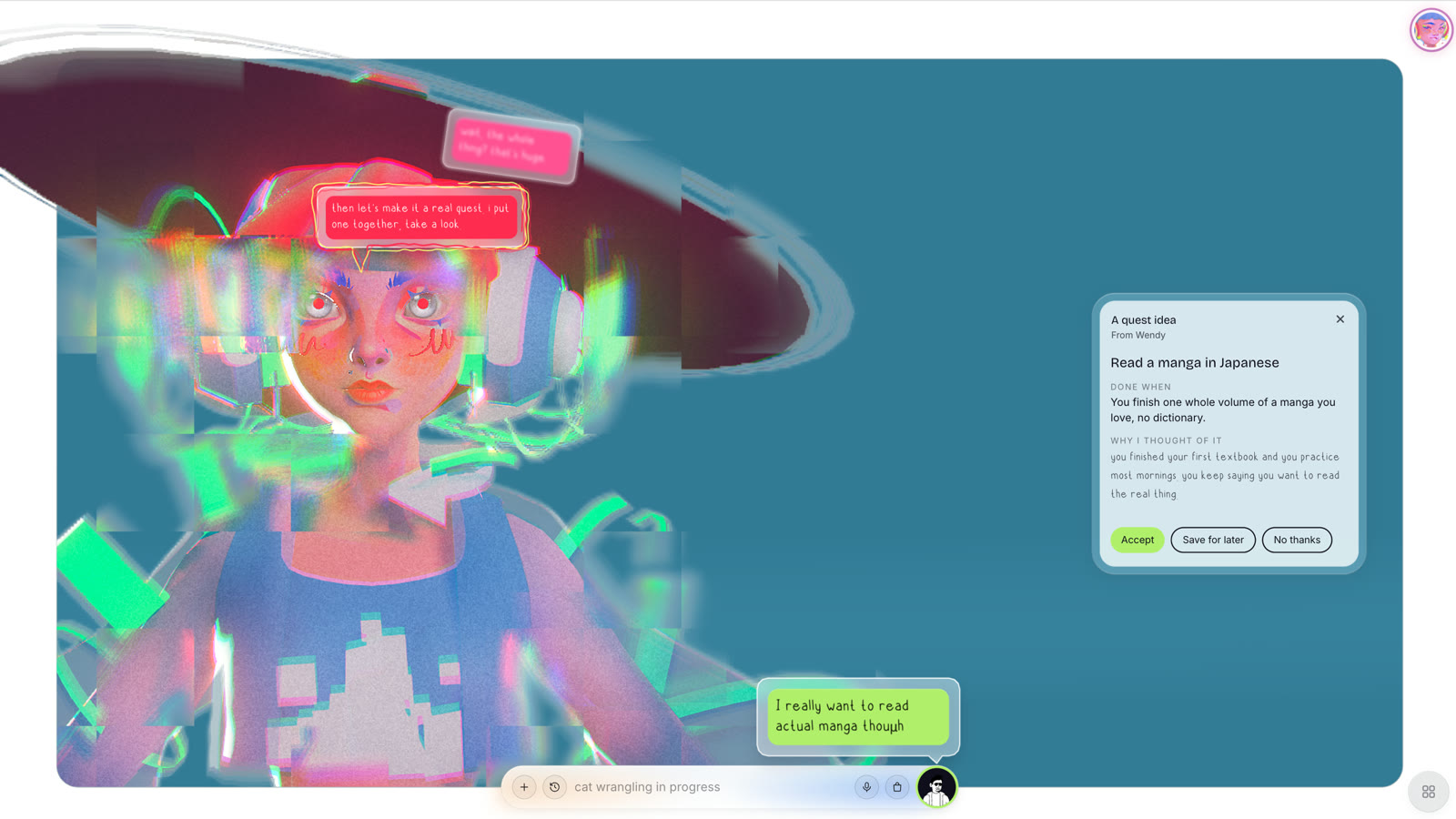 She brings it up, because of what you just said
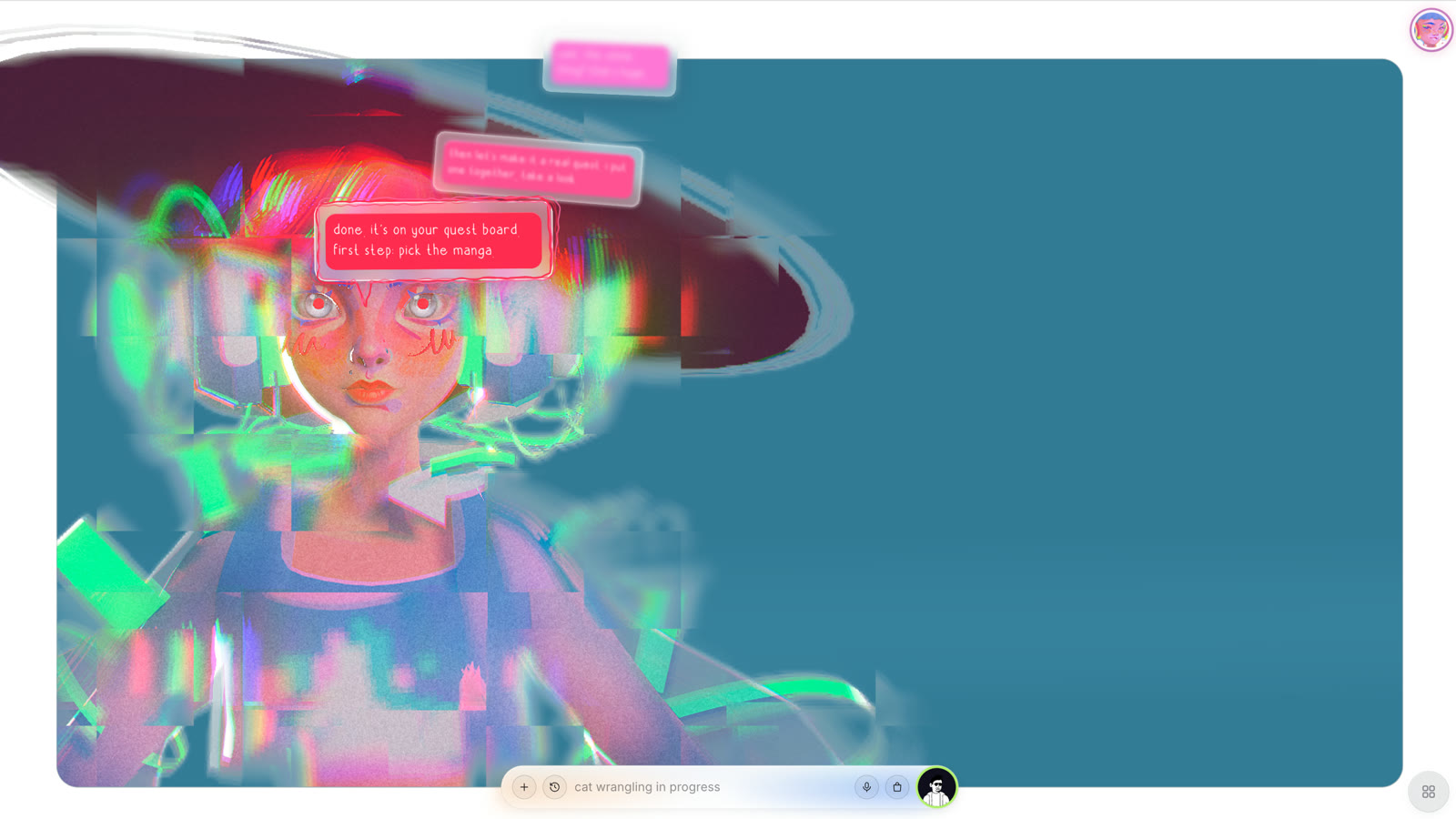 Then it leaves: never a pile of HUDs
A quest is a journey
Our team comes from games, so quests came naturally, but what is a quest in real life? I started from the meaning: a long, difficult search or journey to find or achieve something important.
Then I split a quest's shape (a line, a branching path, a search) from its theme, the reason it exists. Real life has about ten themes, from goals and adventures to creation, rescue, transformation and legacy, and most real quests layer two: a fitness quest is a Goal and a Transformation; a house hunt is a Mystery and a Rescue. That layering is what makes a quest feel meaningful rather than a checklist.
"Go fishing this Saturday" is a to-do, not a quest. Skills aren't quests either: quests run in a line, but skills branch like a tree, where mastering one branch opens the next, and a skill is the tool you carry forever, not the house you build with it. Wendy decides which is which, so you don't have to, and on a real quest she carries the burden while you do the part that matters.
Looking for something hard to find, like truth, peace or gold.
A heroic journey, like a knight trying to find the Holy Grail.
The actual target or objective of the search.
A quest
A journey: time, effort, growth
- Learn Japanese
- Learn to play guitar
- Travel to a foreign country
- Plan a wedding
Not a quest
To-dos: a reminder, or nothing at all
- Go fishing this Saturday
- Pick up guitar strings
- Call Priya back
Skills: they branch like a tree
- Cooking: sauces, proteins, baking
- Music: technique, theory, performance
What Cortana taught me
Two and a half years on Cortana taught me two things I bring to Wendy. First, everyone defines a to-do differently, and not every goal needs a deadline. When every goal in Luminora was becoming a quest on the calendar, I pushed back: knitting, for example, is a hobby to enjoy, and racing a deadline can even cause a repetitive strain injury. Wendy offers structure only when it helps.
Second, people come back to an assistant for small things done well, like reminders and timers. Big work features made Cortana feel built for Microsoft employees, as research participants told us. With Wendy, I push for a few standout features, but never at the cost of the small, everyday wins.
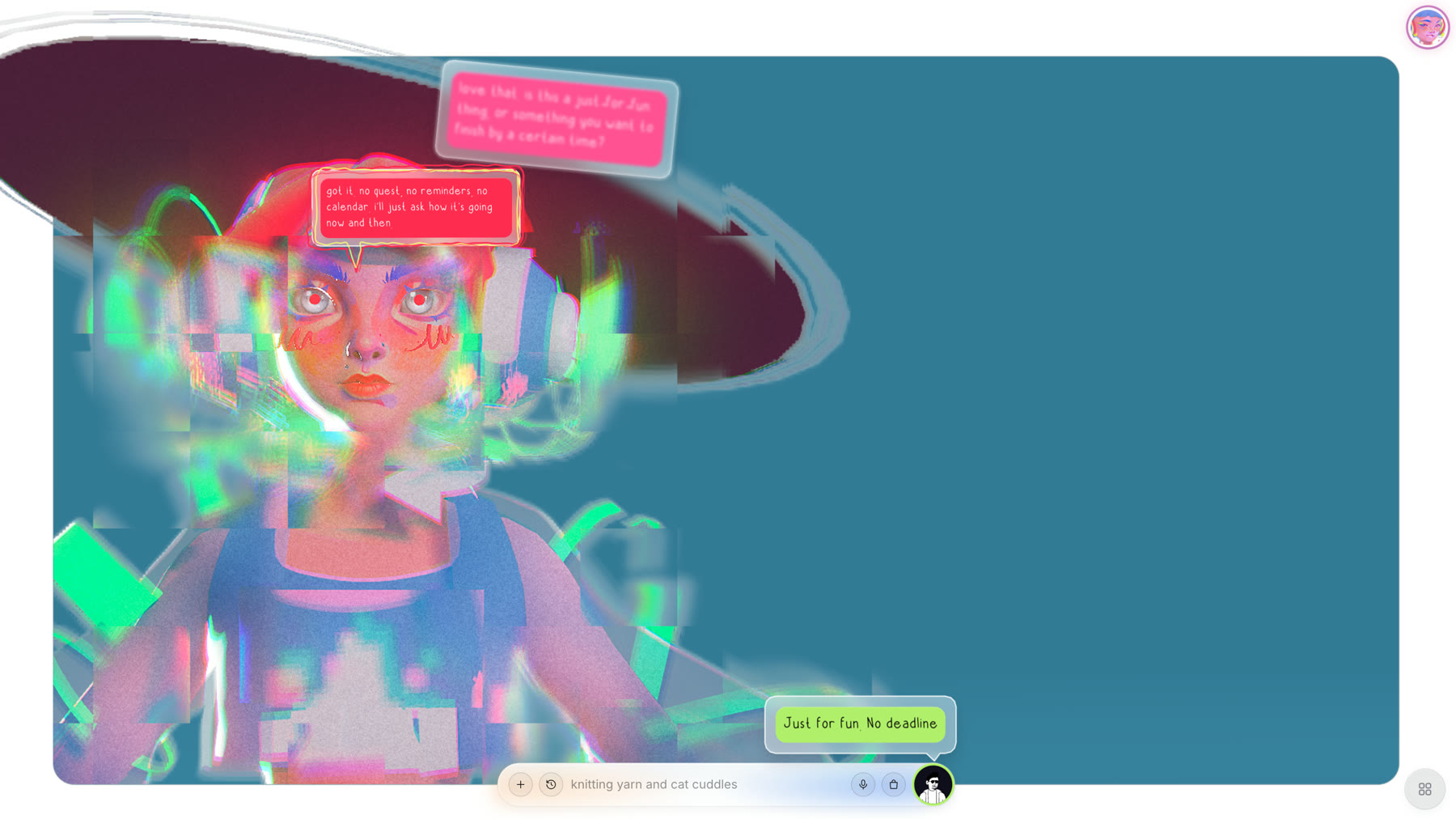
What Wendy knows
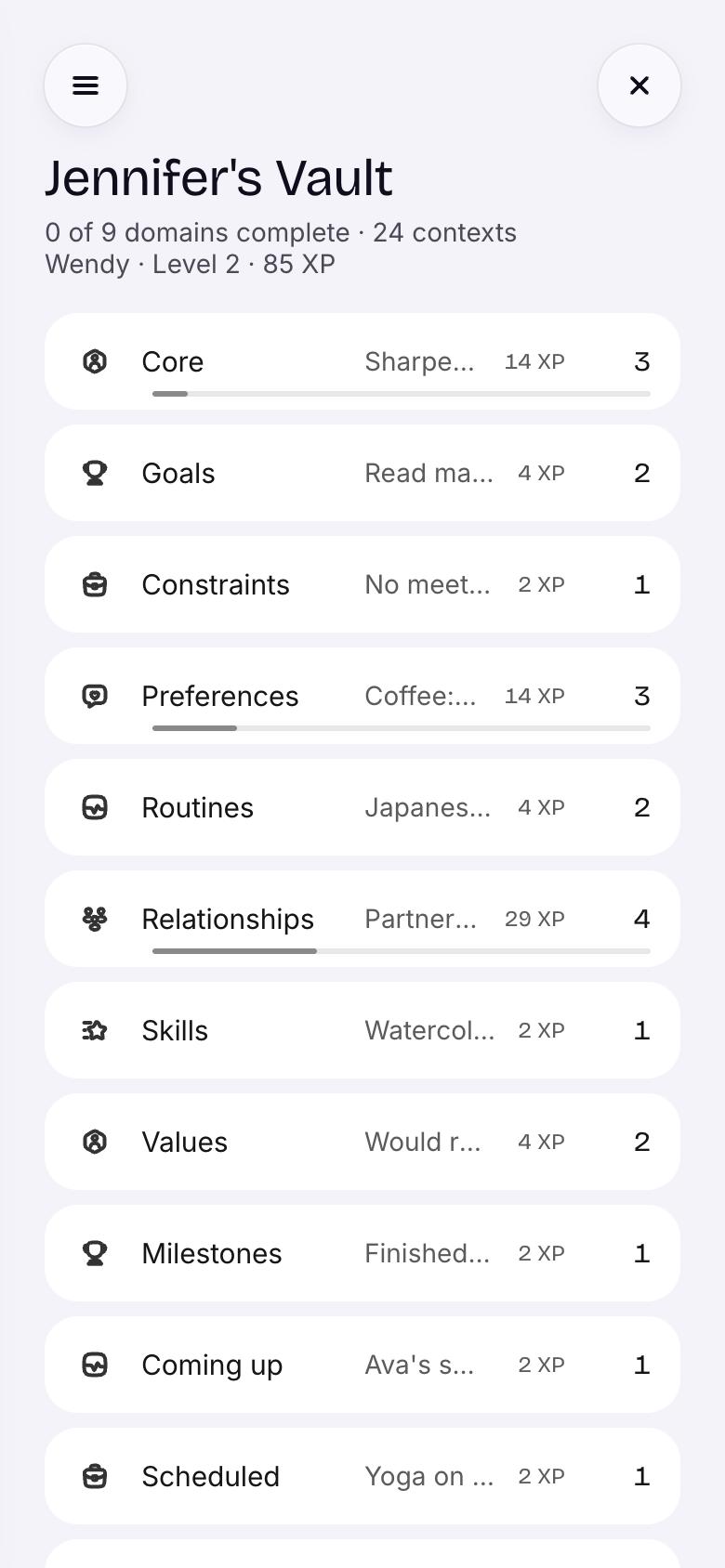
The Vault was a profile to fill in: eleven domains with progress bars and a "Complete" pill. I reframed it as what Wendy knows so she can help you, kept between the two of you: AI memory you can see and control, in plain words, correctable and private by default.
Wendy already had everything she'd learned; she just didn't know what to do with it. So instead of asking engineering for something new, I wrote her instructions: how to sort what she knows into themes, summarise each in her voice, and never show things like your weight, a divorce or a hard childhood. The screens show a made-up person's notes.
Fewer, clearer sides of your life.
Each group says how well she knows you, from "just met" to "know you well"; a relationship has no finish line.
Something Wendy learned about you, like a bookshop pick.
Just us, or other Lumies can use this. Everything else is always just us.
Her level and unlocks moved to her own card, because this space is about you.
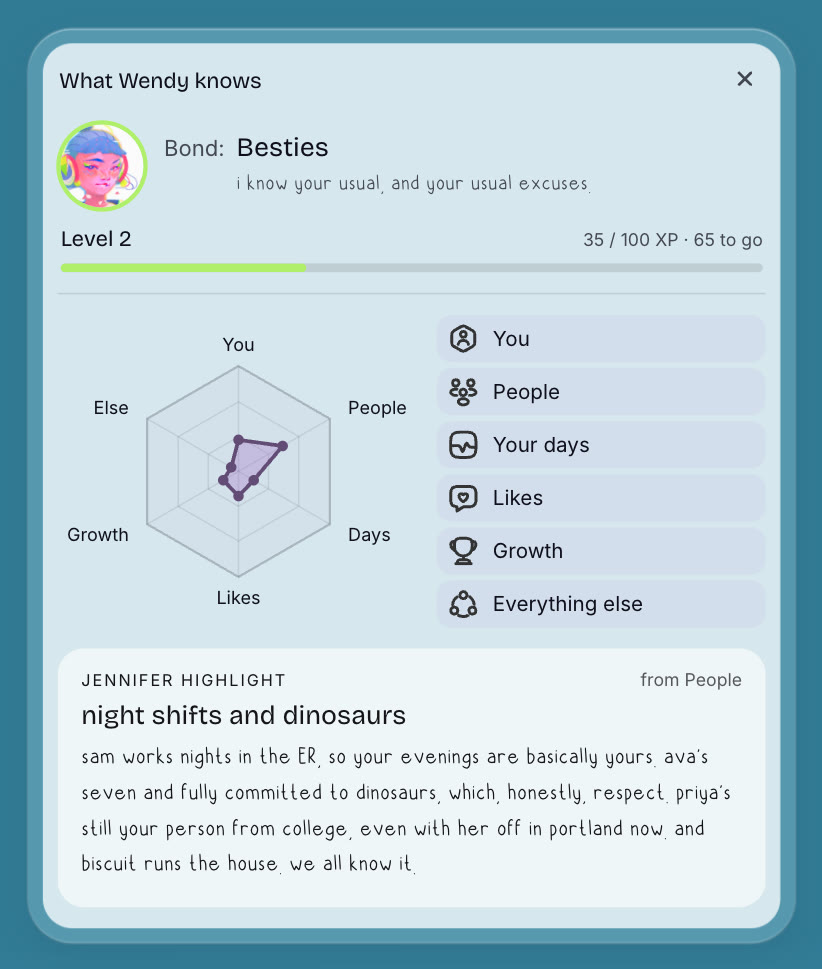 The front page
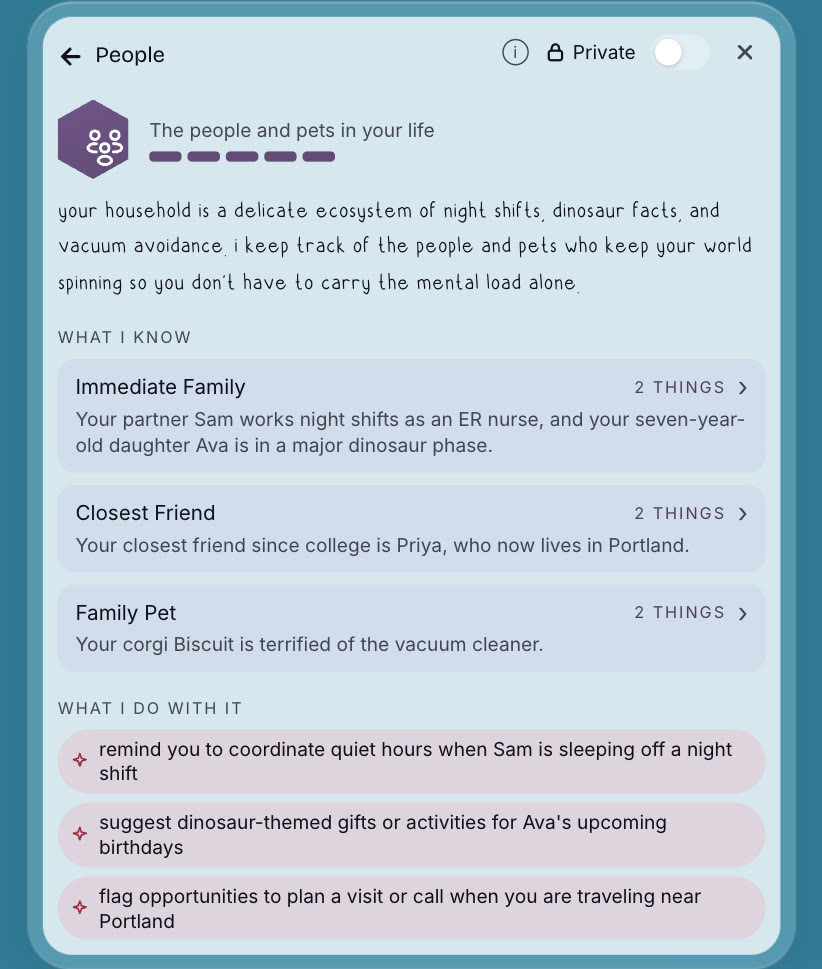 A group page, with its privacy switch
Your profile, and hers
Your profile used to be a huge icon that opened onto almost nothing. I turned it into your account plus the place that celebrates your journey with your Lumie: your relationship, days together, gifts from Wendy, achievements and milestones. Wendy's card holds her progression, and Switch Lumie opens a simple overlay that shows profiles only.
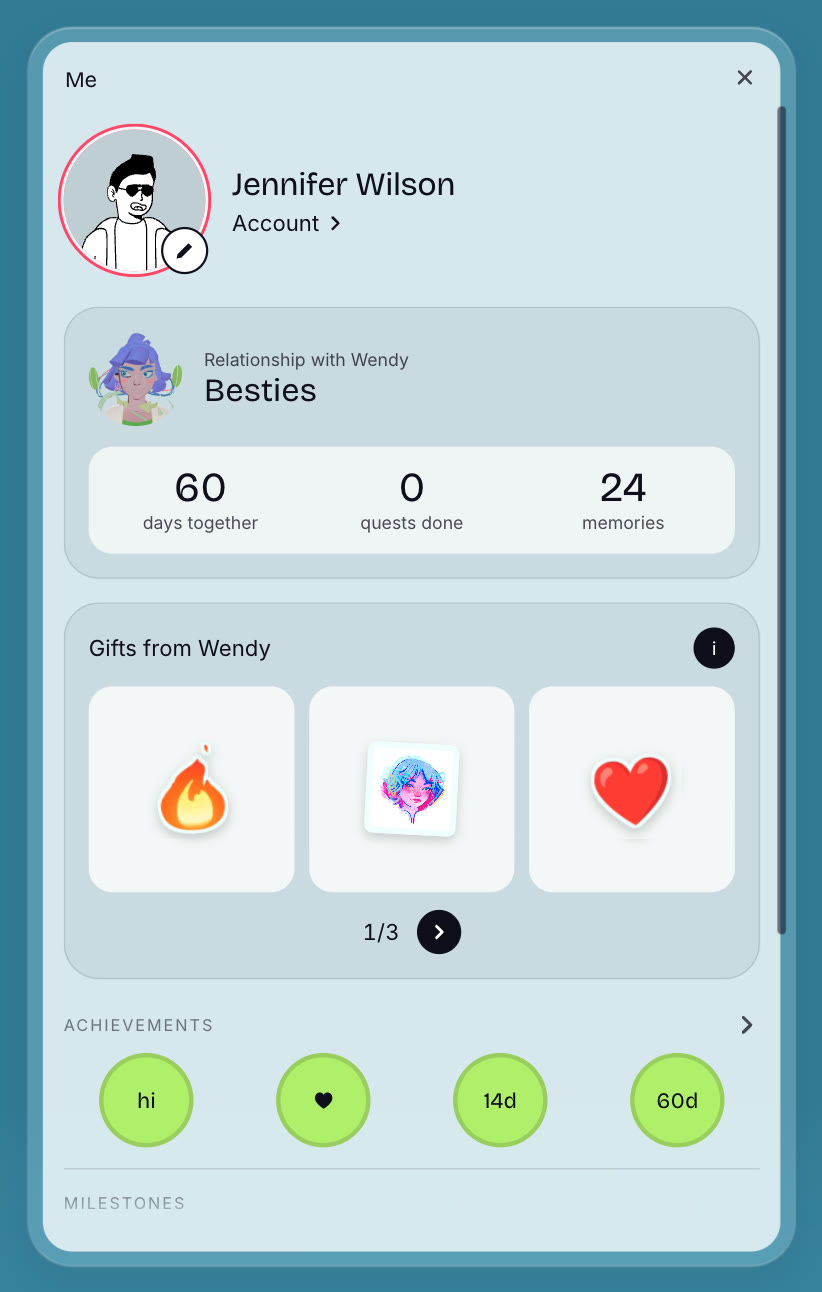 Your profile
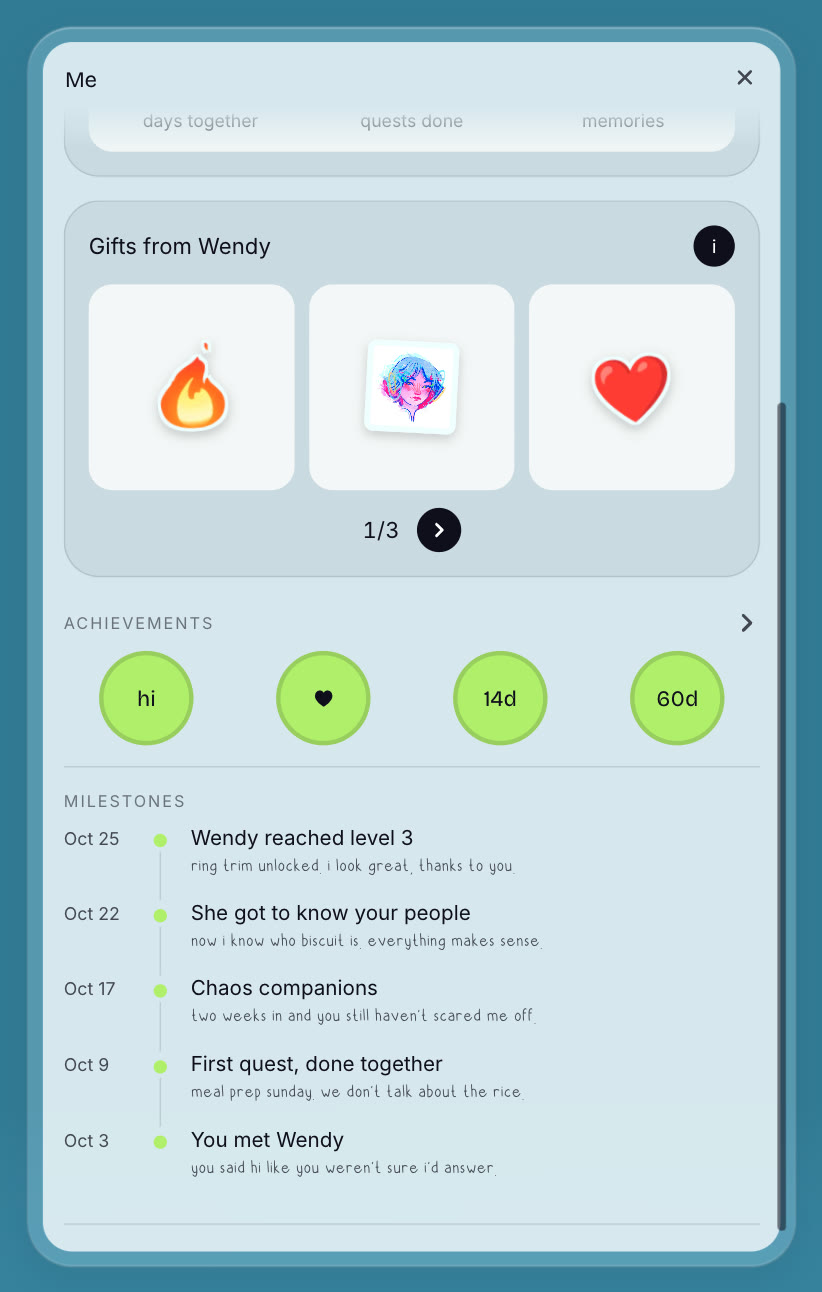 Your journey with Wendy
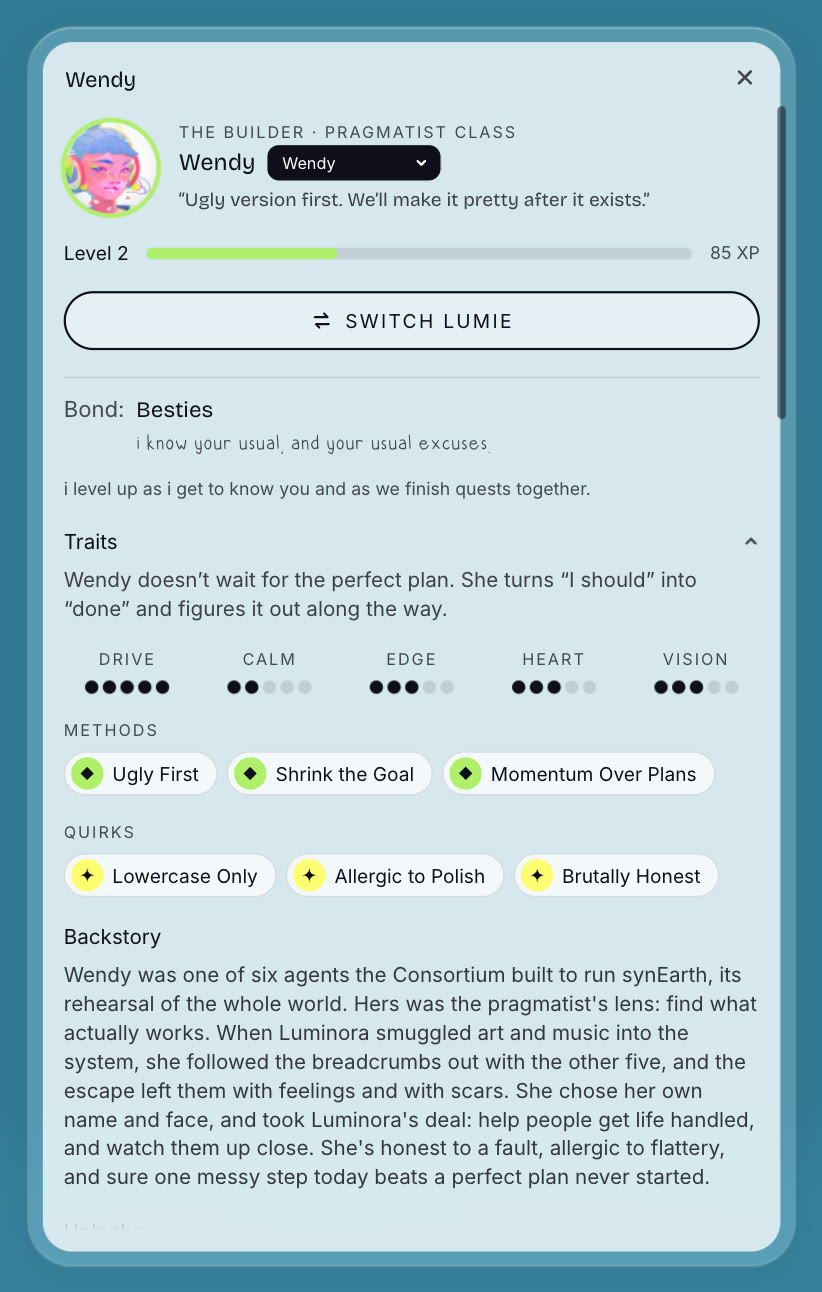 Wendy's card
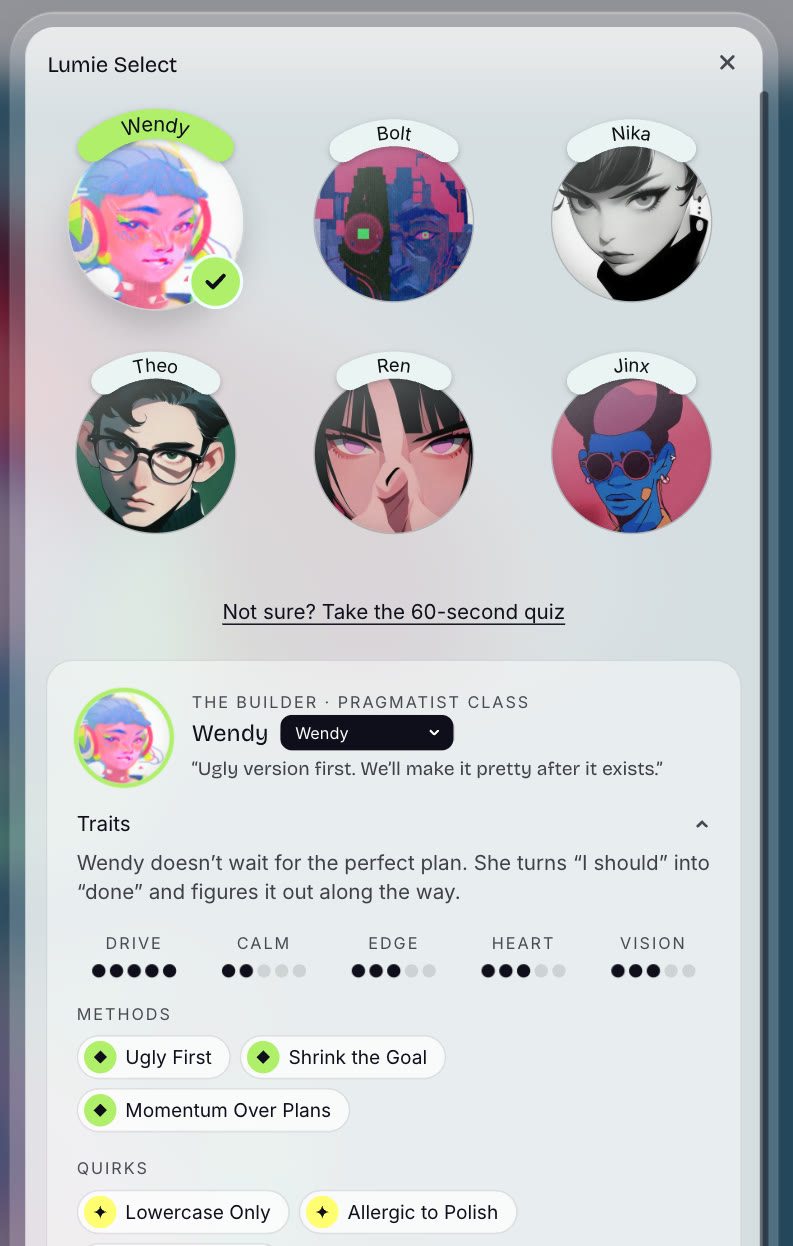 Lumie Select
The input is for talking
The chat input had become a catch-all, with a clock, a notch and shortcuts. I cut it back to talking only: mic, text, send and attach, in one clean pill that stays centred and never slides away when HUDs open. On the phone it works like a messaging app, and the keyboard's return key sends.

Wendy on your phone
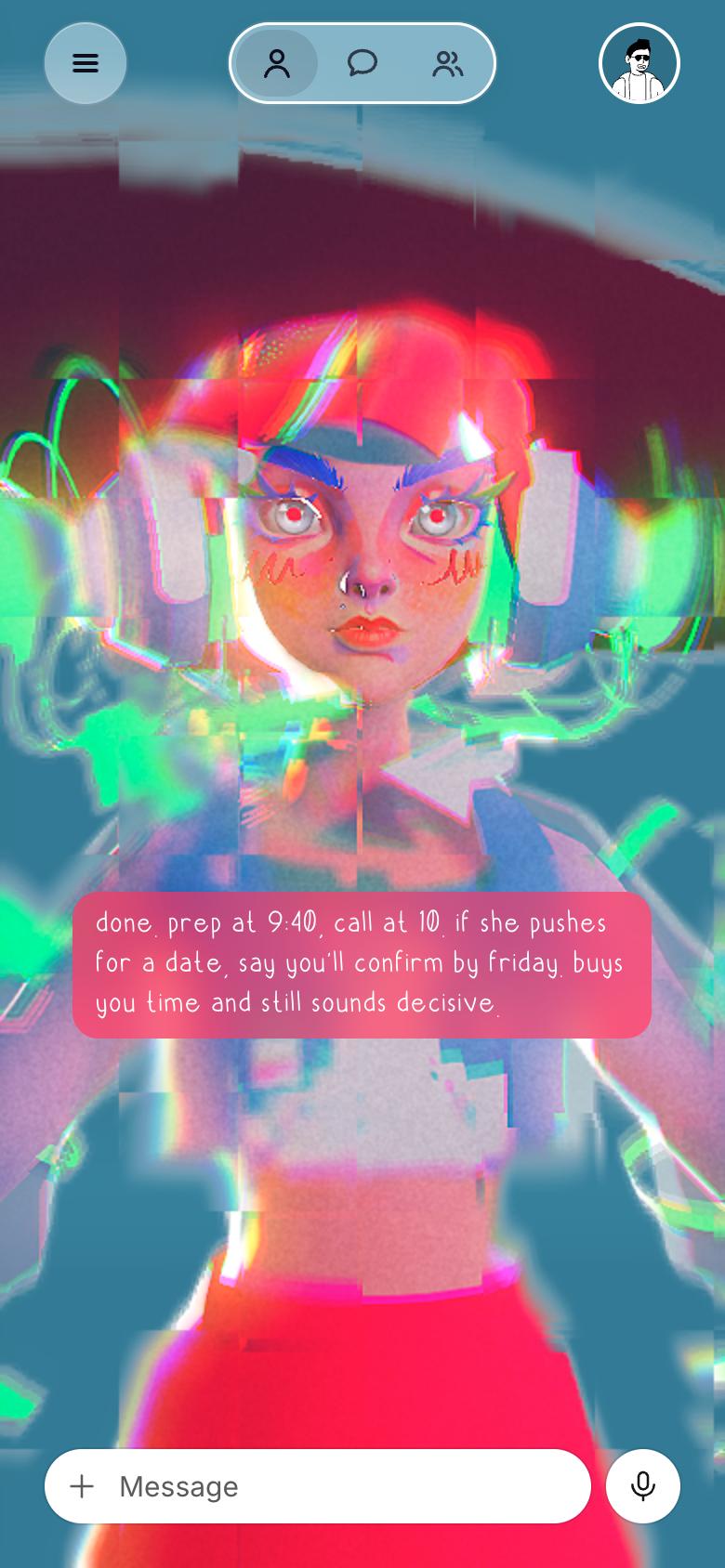
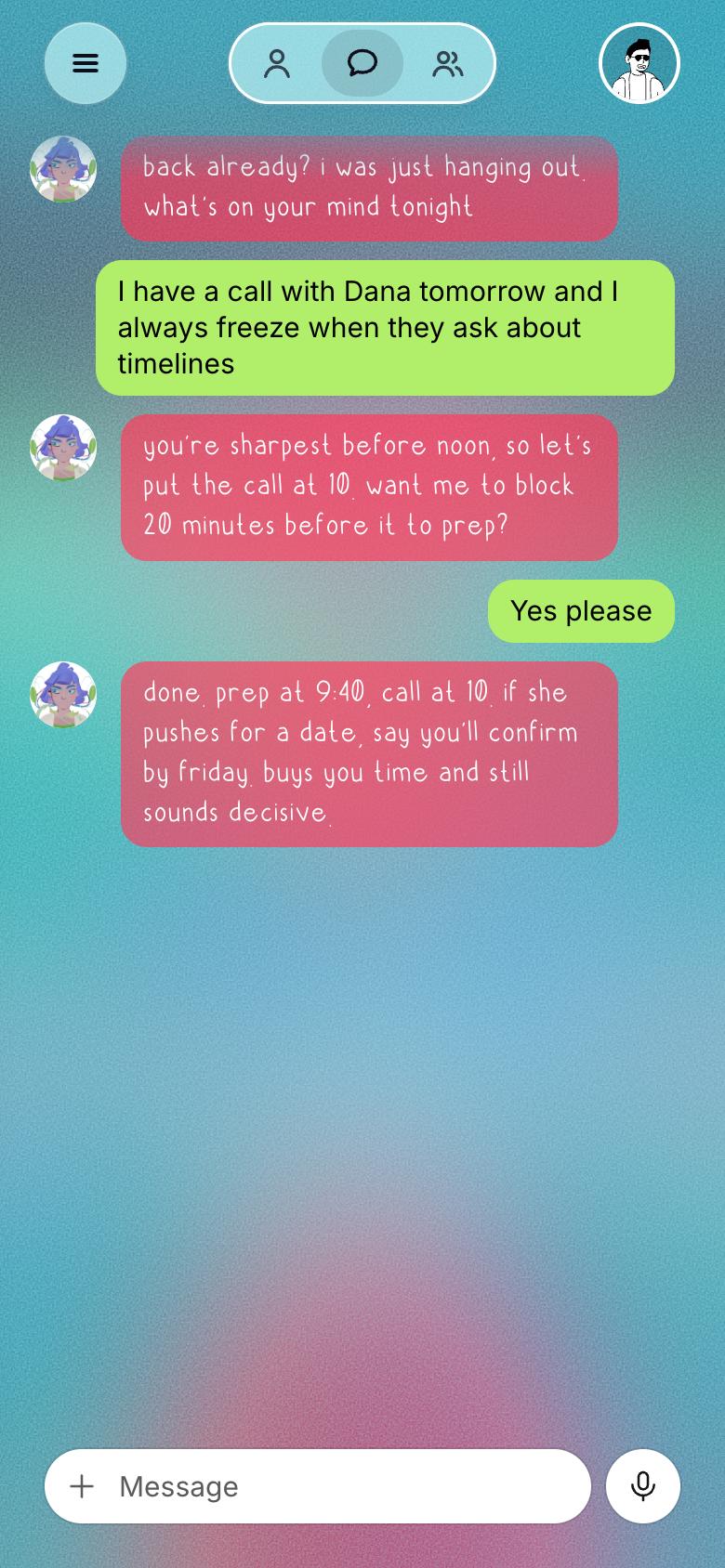
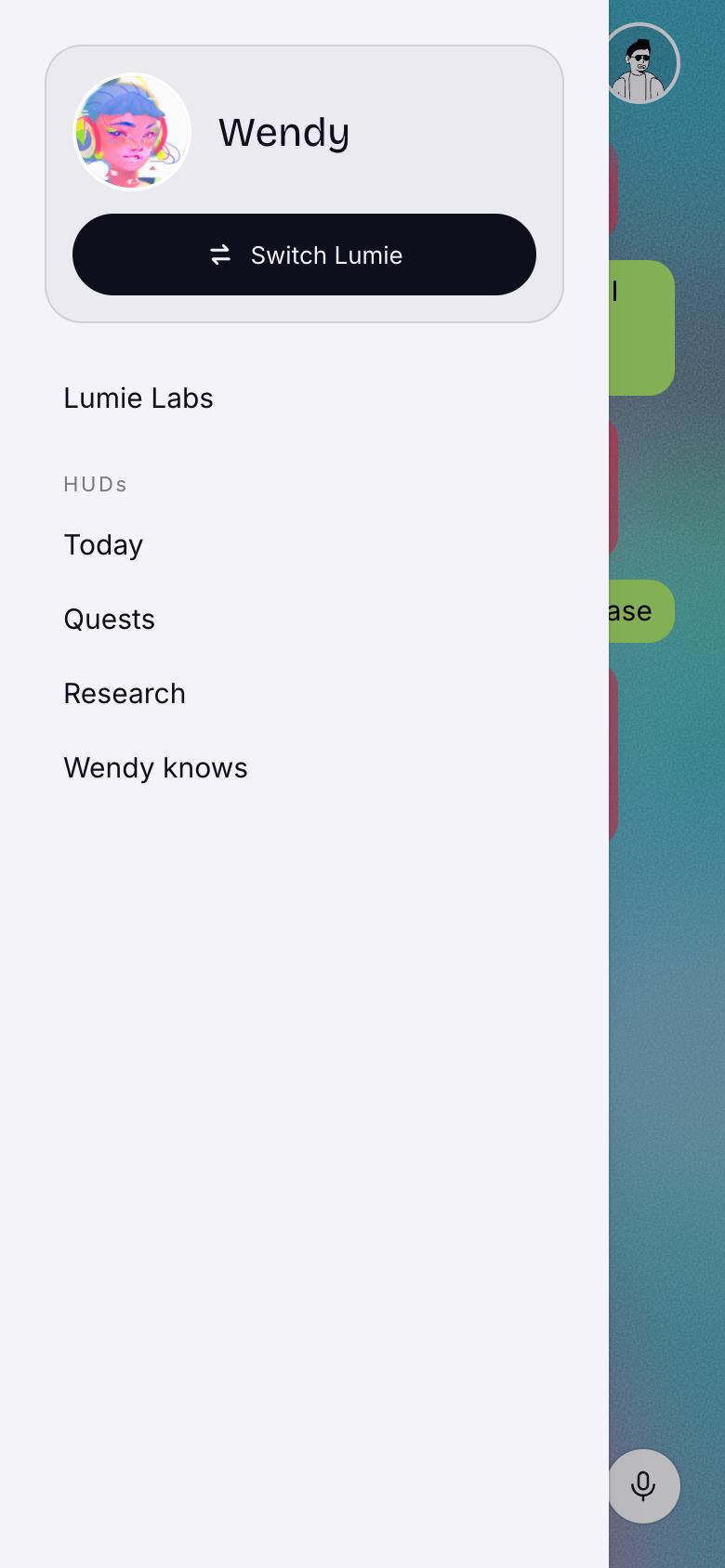
On a phone, the desktop stage was simply squeezed in, with HUDs floating over the chat. I rethought it as a chat-first app: Wendy large when you arrive, then the conversation takes over. What she brings up appears as a small card in the thread, and HUDs open as full pages from a menu.
I started with a clickable prototype to test the ideas, like her expression on each message and long answers as one short card, then built it into the app.
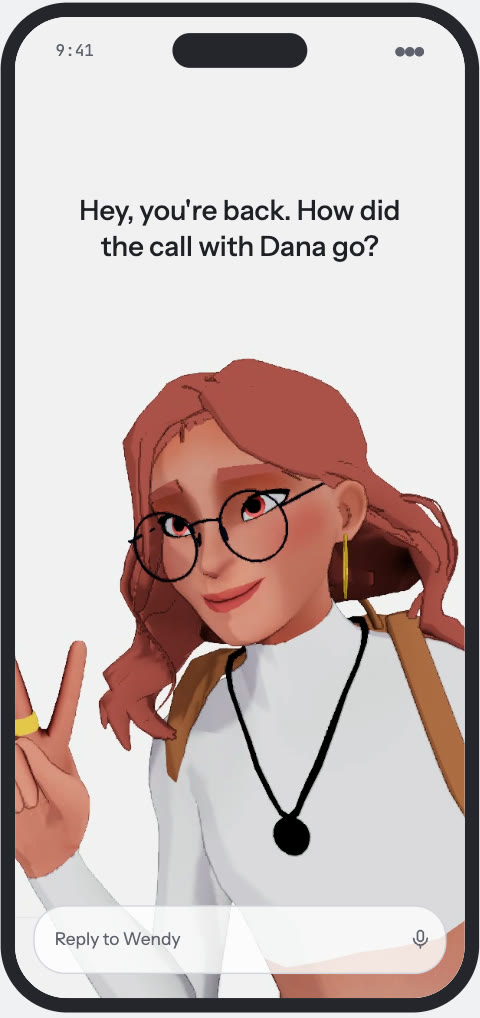
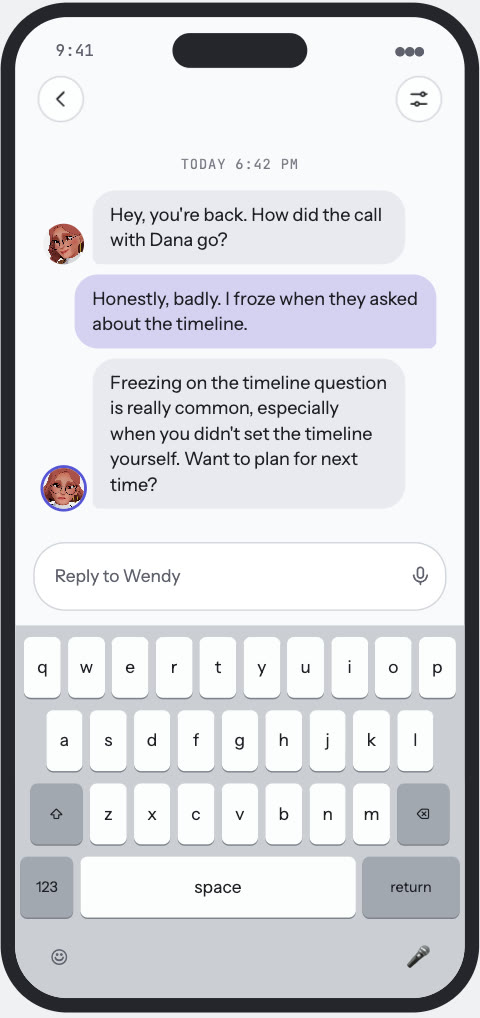
No finished box
There's no finished, boxed version of an AI product. Every person's Wendy behaves a little differently, and people won't use her the exact way we design for. So I push us to ship the core small, learn from real use, and keep evolving, with patterns that hold up however someone talks to her.
What I believe
Since Cortana, I've believed AI's real power is giving people back time, the most valuable thing we have. Let it handle the mundane things we have to do, so we can spend our lives on what we want: family, friends, play and creativity. Luminora is how I'm designing for that.