Destiny 2: Renegades
Renegades brought elite Cabal with ablative armor, and a new kind of weapon, blasters, to Destiny 2.
Bungie's Combat team, a separate org from mine, had never had UI/UX support. For Renegades they got a UI/UX team, as a pilot for bringing UX in much earlier in feature development, and I led it: a UI designer, a UX designer, a technical UX designer and a UI engineer.
- Role
- Design UI/UX Area Lead
- Services
- UI/UX leadershipUX designUser research
- Studio
- Bungie
- Team
- 4 people
- Year
- 2025
Bringing UX in earlier
Until then, Combat features were designed and built with no UI/UX input at all. Our job was to join at the start, so we could help define goals and player needs before the features were set.
- Research first
- Player research framed Combat's problems before features were set.
- Quick answers
- Smaller studies, and quick checks that didn't need a formal study.
- One roadmap
- A design roadmap aligned with product strategy and schedule.
- Beyond the HUD
- Audio, VFX and enemy models telling players more, not just the HUD.
- Regular syncs
- With the Combat area leads, visual design and engineering.
Ablative armor
We worked as one team across UI, VFX, audio and enemy animation so every element told players the same thing: whether what they were doing was working. The bar, the hit effects, the sounds and how the enemy reacted all had to confirm it.
We also made user research part of our process, turning our weekly playtests into research sessions to refine each element.
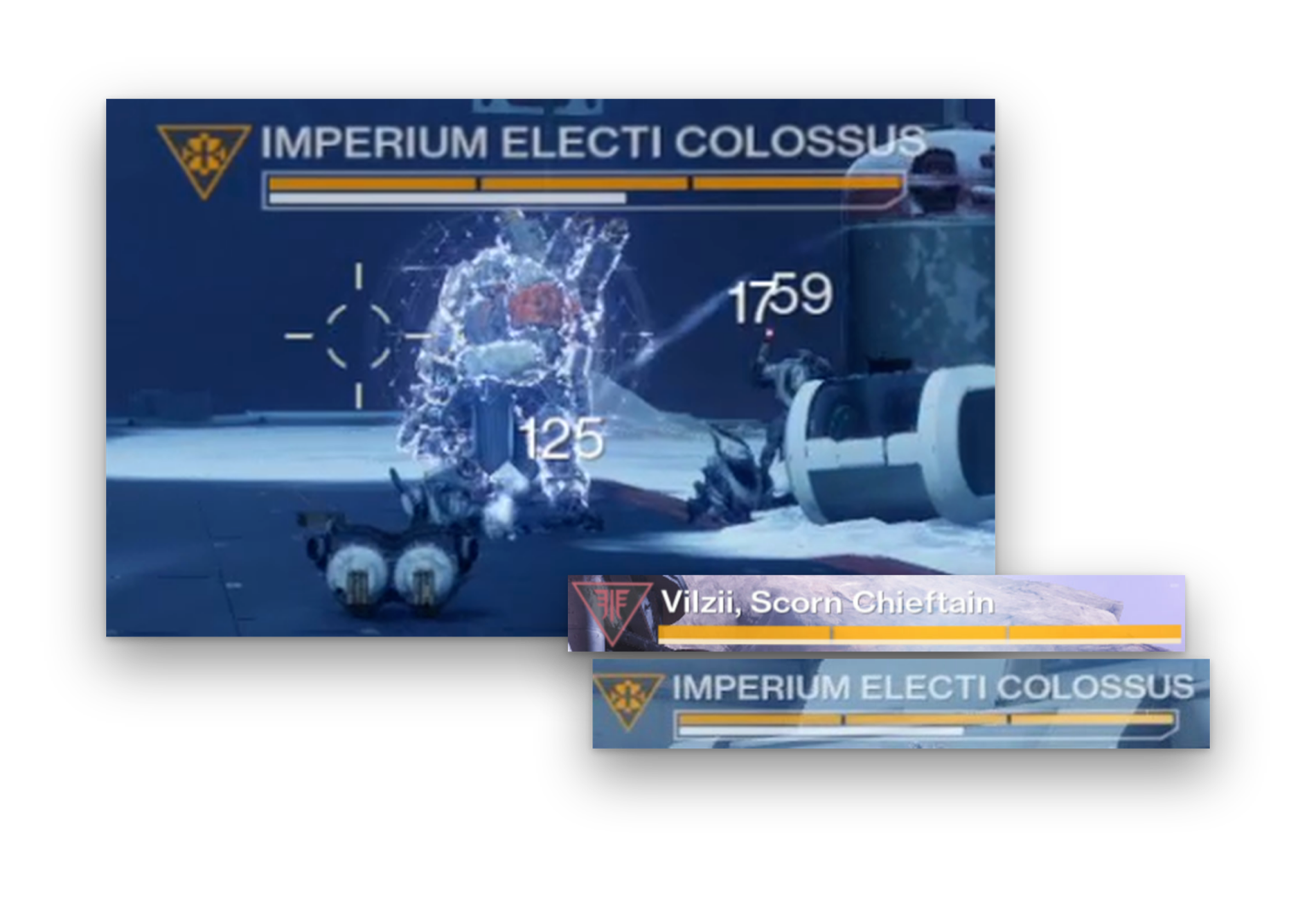
A bar you can read at a glance
Renegades added elite Cabal with ablative armor: a white bar under the health bar that has to be broken first, and regenerates fast.
The same enemies can also carry a normal shield, which still shows as a thin white line. Both are white, so we made the ablative bar visually distinct: a thicker white bar inside its own frame.
On bosses
Bosses carry the same white ablative bar under their health bar, at the bottom of the screen. The boss bar is a different element from the bars over regular enemies, so we carried the same design language across both, and players would recognize ablative armor on a boss as quickly as on any other enemy.
That mattered most because boss fights have two phases. At the halfway marker the boss turns immune for a short stretch, then the second phase begins and the armor comes back at full strength. Players had to see right away that the boss was ablative again.

Blasters
I worked closely with the designer who created the blaster framework, and helped him pitch it to leadership to get the feature greenlit.
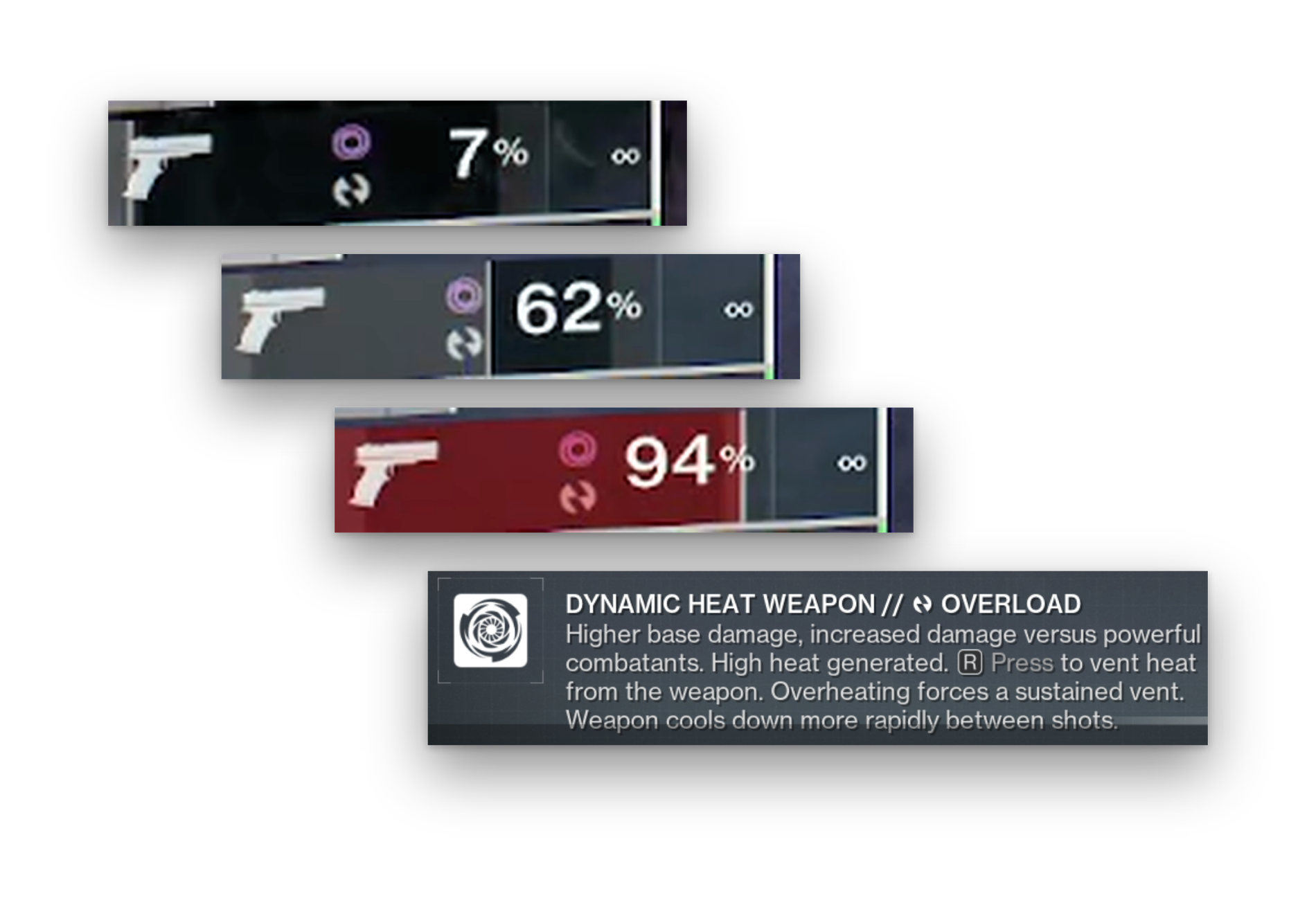
Heat instead of ammo
Blasters fire straight from reserves, build heat with every shot, and overheat if pushed too far, forcing a long vent.
I led how we visualized heat. In the HUD the ammo count becomes a heat percentage that climbs as you fire, the panel turns red as you near overheat, and it drops back down when you vent.